Canada’s laws fully accept dual and even multiple citizenships. This means that people can become Canadian citizens without having to give up their current nationality. This is a big plus for many immigrants because it lets them keep their legal ties to their home country while enjoying the rights and benefits of Canadian citizenship.
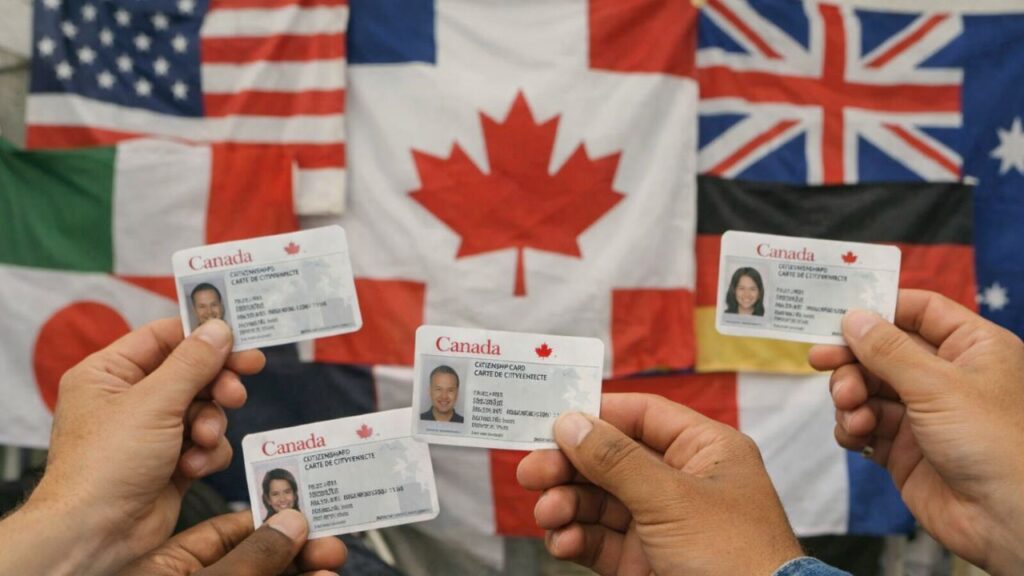
But Canada is not the only country that controls dual citizenship. The laws of both countries will tell you if you can legally hold two passports. Some countries don’t allow dual citizenship at all and require people to give it up automatically. Other countries do allow it, but only under certain conditions.
 5 Big Canada Tax Rule Changes 2026: What Households and Benefit Recipients Must Prepare For
This detailed guide looks at 10 major source countries for new Canadian citizens in 2026 that let people have dual citizenship with Canada. It also explains the rules for each country, makes it clear which ones don’t allow it, and lists the three main ways to become a Canadian citizen.

Canada’s stance on dual citizenship
Canada does not limit how many nationalities you can have. Canada does not limit how many citizenships you can have, and you do not have to give up your original citizenship when you become Canadian.
From Canada’s point of view:
- It is legal to have dual citizenship.
- It is okay to have more than one citizenship.
- You don’t need to declare or get approval.
No matter how many passports you have, once you become a Canadian citizen, you have the same rights and responsibilities as any other Canadian.
The laws of the other country, not Canada’s, are what limit things the most.
Why the Rules for Dual Citizenship Matter
Dual citizenship has an effect on:
- If you have to give up your original nationality
- What passport you need to use to enter or leave a country
- Getting consular protection while abroad
- Military, tax, or legal duties in your home country
If you know these rules before you apply for Canadian citizenship, you can avoid problems that you didn’t expect.
Countries That Let You Have Dual Citizenship with Canada
Based on current laws and policies, here are 10 countries whose citizens can legally hold dual citizenship with Canada.
1. The Philippines
Only natural-born Filipino citizens can have dual citizenship in the Philippines.
In the Philippines, the law says:
- Filipinos who are born in the Philippines and later become Canadian citizens can keep their Philippine nationality.
- Republic Act 9225 says that you can do this by taking an oath of allegiance.
- No need to give up
If at least one of the child’s parents is Filipino and they were born outside of the Philippines, they are considered dual citizens by birth. To make their status official, these people must tell a Philippine consulate about their birth.
People who were not born Filipino citizens may have to deal with restrictions.
2. Nigeria
Nigeria allows people to have dual citizenship with Canada, but only if they were born in Nigeria or are descendants of Nigerians.
Some important rules are:
- Nigerians who were born citizens or became citizens through their parents can keep their citizenship after moving to Canada. However, Nigerians who became citizens through naturalisation must give up their Nigerian citizenship if they get another nationality.
Dual citizens of Nigeria and Canada must also:
- You need a Nigerian passport to get in and out of Nigeria.
This rule is strictly followed.
3. The United States
There are no limits on dual citizenship between the US and Canada.
Citizens of the US can:
- You can become a Canadian citizen without giving up your US citizenship.
- Hold both passports at the same time
This applies to people who got US citizenship by:
- Birth
- Becoming a citizen
- Citizenship through ancestry
According to US law, US citizens must:
- Use a US passport to enter and leave the US.
Canada doesn’t mind this requirement.
4. France
France has allowed dual citizenship since 1973, and there are no conditions or restrictions.
People from France can:
- You can be a Canadian citizen without giving up your French citizenship.
- Keep more than one citizenship
France does not limit dual citizens’ rights to travel, access consulates, or hold a nationality.
5. Pakistan
Under new laws, Pakistan allows people to have dual citizenship with Canada.
The Pakistan Citizenship (Amendment) Bill 2024 made Pakistan’s dual citizenship rules official in 2026. This means that Pakistanis can keep their citizenship if they get citizenship in certain countries.
Canada is on that list of countries that are allowed.
This means:
- Pakistani citizens can become Canadian citizens without giving up their Pakistani citizenship.
- This applies to citizenship gained through naturalisation or descent, if you qualify.
Pakistan only allows dual citizenship with certain countries, but Canada is fully recognised.
6. Brazil
Brazil lets people have more than one citizenship without any restrictions.
Citizens of Brazil:
- You don’t have to give up your Brazilian citizenship to become a Canadian.
- Can have and use both passports
Brazil says that having more than one citizenship may make it harder to get help from Brazilian consulates in some cases, but citizenship itself is not affected.
7. The UK
Canada and the UK both allow people to have dual citizenship.
People from the UK:

- Don’t have to give up their UK citizenship
- Can legally have both passports
But:
- To enter the UK, dual nationals must have a travel document from the UK or Ireland.
- When dual citizens are in the country of their other nationality, the UK government does not help them with diplomatic issues.
These are not legal barriers; they are practical ones.
8. Germany
In 2024, Germany made big changes to its citizenship laws.
As of June 27, 2024, people from Germany:
- Can have dual citizenship with Canada and other countries
- You no longer automatically lose your German citizenship when you get another nationality.
Before this change, you could only have dual citizenship in a few cases, such as:
- Citizenship by birth or naturalisation in the EU or Switzerland
- Special permission to keep your German citizenship
- Citizenship through ancestry
The new rules make it easy for many people to have two citizenships.
9. Syria
People in Syria can have more than one nationality.
People from Syria:
- When you become a Canadian citizen, you don’t have to give up your Syrian citizenship.
But:
- The Syrian government sees dual citizens as Syrian citizens first.
- This is true for legal, administrative, and diplomatic issues in Syria.
This can change the protections and responsibilities that are required by law.
10. Mexico
Mexico clearly allows people to have more than one citizenship.
People from Mexico:
- Can get Canadian citizenship without giving up their Mexican citizenship
- No conditions or restrictions apply
This policy has been the same since 1998 and will stay that way.
Countries That Don’t Let You Have Dual Citizenship With Canada
Some countries do not allow dual citizenship at all.
Some good examples are:
- Iran, China, and India
People from these countries must give up their original citizenship in order to become Canadian citizens.
Indians Can Have Dual Citizenship
India does not allow people to have two citizenships in any situation.
If you are from India:
- To become Canadian, you have to officially give up your Indian citizenship. Indian law says that you can’t have both passports.
But India does have the Overseas Citizen of India (OCI) status.
OCI status:
- Is a visa for life
- Lets you go to India without a visa
- Gives some people the right to live and work in the country
- Does not give people the right to vote or hold constitutional positions
OCI is not the same as citizenship, but it is a useful option.
How to Get Canadian Citizenship
There are three main pathways to Canadian citizenship.
Citizenship by Birth
Any child born in Canada automatically becomes a Canadian citizen, regardless of their parents’ immigration status.
Exceptions include:
- Children of foreign diplomats
- Children of consular officers or staff with diplomatic immunity
This rule applies nationwide.
Naturalisation as a way to become a citizen
Permanent residents can become Canadian citizens if they meet all the requirements.
Some important criteria are:
- At least 1,095 days (three years) of physical presence in Canada within the last five years
- Filing income taxes if required
- No serious criminal prohibitions
- Intention to continue living in Canada
Applicants aged 18 to 54 must:
- Pass a citizenship test on Canadian history, values, rights, and responsibilities
- Demonstrate English or French proficiency at CLB level 4 or higher
A citizenship ceremony is the final step.
Citizenship by Descent and Bill C-3 Changes
Major changes to citizenship by descent took effect on December 15, 2026, under Bill C-3.
For Those Born Abroad Before December 15, 2026
- The first-generation limit has been removed
- Citizenship can pass through unlimited generations
- Lineage must trace back to a Canadian-born or naturalized ancestor
For Those Born Abroad On or After December 15, 2026
- Citizenship can pass beyond the first generation
- The Canadian parent born abroad must prove a substantial connection to Canada
- This requires at least 1,095 days of physical presence in Canada before the child’s birth
These changes make it much easier for people to become Canadian citizens by descent.
Canada is still one of the best places in the world for people with dual citizenship. For citizens of many major source countries, becoming Canadian does not require giving up their original nationality. However, every case depends on the laws of the other country involved.
Before applying for Canadian citizenship, it is essential to:
- Confirm your home country’s dual citizenship rules
- Understand passport and travel requirements
- Be aware of legal and consular limitations
For many, dual citizenship offers the best of both worlds: long-term security in Canada and continued connection to their country of origin.