
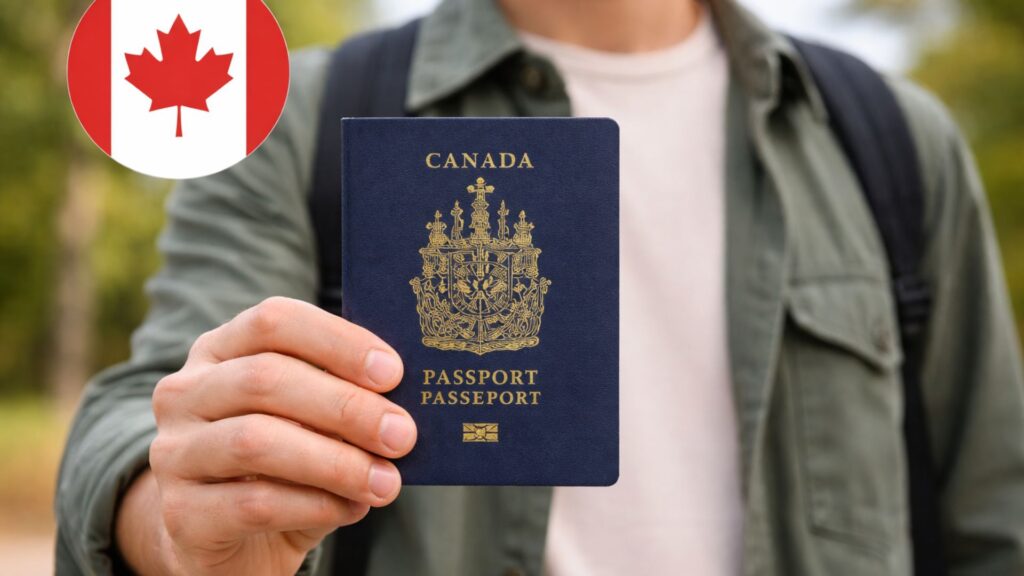
Canada’s passport is still one of the most powerful travel documents in the world. Canada’s passport ranks near the top of global passport indexes in 2026. This means that Canadians can travel to many countries without a visa or with visa-on-arrival privileges. This article goes into great detail about the Canadian passport’s global ranking, explains what visa-free travel means, lists all of the visa-free destinations, and gives Canadians useful tips for planning international travel in 2026.
How to Rank Passports
The number of countries and territories that let a person with a certain passport enter without a visa, with a visa on arrival, an electronic travel authorisation , or other similar easy entry requirements determines the passport’s ranking. electronic travel authorisation, visa on arrival, and easy entry requirements all affect global mobility. Henley & Partners, Capital, and other independent groups publish passport indexes.
 Goodbye to Service Canada Confusion: Streamlined Payment System Rolls Out Across Canada in 2026
Every year, these indexes are updated to show changes in global visa agreements, diplomatic relations, and the way the world is changing. global visa agreements and diplomatic relations shape the rankings. The more places you can go with your passport, the stronger it is.

Canada has always had a high passport ranking because it has strong diplomatic ties, stable international relations, and visa agreements with many other countries that work both ways. strong diplomatic ties, stable international relations, and visa agreements with partners support its position. Canada still has one of the best passports in the world for travel freedom in 2026.
The 2026 Ranking of Canadian Passports
The Canadian passport is one of the strongest in the world in 2026. For most of the world’s countries, it lets people in without a visa, with a visa on arrival, or with an electronic travel authorisation. one of the strongest and electronic travel authorisation access highlight its value. Canada is always in the top five in the world, even though the exact numbers vary a little from one index to the next.
This means that Canadians can go to more places without needing a regular visa than people from most other countries. without needing a regular visa and saves many travellers time show its benefit. This level of access saves many travellers time, money, and administrative headaches.
We always look at passport rankings again, and even small diplomatic changes can change a country’s score. small diplomatic changes and global passport lists influence positions. Canada’s diplomatic network and travel agreements, on the other hand, help the country stay high on global passport lists.
What Visa-Free and Visa on Arrival Really Mean
Before we get into the list of countries, let’s go over some common terms you’ll see when travelling internationally:
- Visa-Free Entry: Canadians can go to the destination without needing a visa. Travellers don’t need to apply before they leave, and they can stay for a set amount of time based on the rules of the host country.
- Visa on Arrival: Travellers don’t need to get a visa ahead of time; they can get one at the border when they arrive. This usually only requires a little bit of paperwork and sometimes a small fee.
- Some countries require an Electronic Travel Authorisation (eTA) before you can travel. These aren’t regular visas, but you still need permission to fly with them. For instance, Canada has its own eTA process for people flying into the country.
Knowing these terms helps Canadians plan their trips better and avoid surprises at the border. plan their trips better and avoid surprises at checkpoints ensures smoother travel.
Complete List of Countries Where Canadians Can Enter Without a Visa or Get a Visa on Arrival in 2026
The list below shows the most up-to-date information on countries and territories that let Canadians enter without a visa, with a visa on arrival, or with a simple electronic travel authorisation. most up-to-date information and simple electronic travel access make planning easier. For easier reference, the list is broken up by region.
Europe
Canada has great access to all of Europe because of long-standing agreements and its involvement in important travel frameworks. great access to and important travel frameworks support easy entry.
- Albania (eTA or visa on arrival)
- Andorra (no visa needed)
- Austria (no visa needed; part of the Schengen area)
- Belgium (no visa needed; Schengen area)
- Bosnia and Herzegovina (no visa needed)
- No visa needed for Bulgaria
- Croatia (no visa needed; part of the Schengen area)
- Czech Republic (no visa needed; part of the Schengen area)
- Denmark (no visa needed; part of the Schengen area)
- Estonia (no visa needed; part of the Schengen area)
- Finland (no visa needed; part of the Schengen Area)
- France (no visa needed; part of the Schengen area)
- Germany (no visa needed; Schengen area)
- Greece (no visa needed; Schengen area)
- Hungary (no visa needed; part of the Schengen area)
- Iceland (no visa needed; part of the Schengen area)
- Ireland (no visa needed)
- Italy (no visa needed; part of the Schengen area)
- Latvia (no visa needed; part of the Schengen area)
- Liechtenstein (no visa needed; part of the Schengen area)
- Lithuania (no visa needed; part of the Schengen area)
- Luxembourg (no visa needed; part of the Schengen area)
- Malta (no visa needed; part of the Schengen area)
- Monaco (no visa needed)
- Netherlands (no visa needed; part of the Schengen area)
- North Macedonia (no visa needed)
- Norway (no visa needed; part of Schengen area)
- Poland (no visa needed; part of the Schengen area)
- Portugal (no visa needed; part of the Schengen area)
- Romania (no visa needed)
- San Marino (no visa needed)
- Serbia (no visa needed)
- Slovakia (no visa needed; part of the Schengen area)
- Slovenia (no visa needed; part of the Schengen area)
- Spain (no visa needed; part of the Schengen area)
- Sweden (no visa needed; part of the Schengen area)
- Switzerland (no visa needed; part of the Schengen area)
- United Kingdom (no visa needed for short stays)
For Canadians with a passport, travelling to Europe is still very easy. In many Schengen countries, you can stay for up to 90 days without a visa. travelling to Europe and up to 90 days provide flexibility.
Asia and the Pacific
Visa rules are very different in different parts of Asia, but Canadians can easily get to many places. very different in and easily get to reflect regional variety.
- Bangladesh (visa on arrival)
- Brunei (no visa needed)
- Cambodia (visa on arrival)
- Hong Kong (no visa needed)
- Indonesia (no visa needed for up to 30 days)
- Israel (no visa needed)
- Japan (no visa needed)
- Kazakhstan (no visa needed)
- Kyrgyzstan (no visa needed)
- Laos (visa when you get there)
- Malaysia (no visa needed)
- Maldives (visa on arrival)
- Mongolia (no visa needed)
- Nepal (visa on arrival)
- Philippines (no visa needed)
- Singapore (no visa needed)
- No visa needed for South Korea
- Sri Lanka (eTA)
- Taiwan (no visa needed)
- Thailand (no visa needed for short stays)
- United Arab Emirates (no visa needed)
Before going on a trip, travellers should always check the length of stay limits and any other entry requirements, like proof of onwards travel or money. length of stay and other entry requirements must be reviewed.
Middle East and Africa
People with Canadian passports can go to a number of countries with few requirements before they leave. Canadian passports can and few requirements before departure simplify plans.

- Botswana (no visa needed)
- Egypt (eVisa or visa on arrival)
- Kenya (eVisa)
- Mauritius (no visa needed)
- Morocco (no visa needed)
- Namibia (no visa needed)
- Seychelles (you can get a visitor’s permit when you get there)
- South Africa (no visa needed)
- Tunisia (no visa needed)
- Turkey (eVisa)
Conditions and allowed stay lengths vary, so travellers should check the details before they leave. allowed stay lengths and check the details carefully.
The Americas
Access through the Western Hemisphere is still one of the best for Canadian travellers. Western Hemisphere is and best for Canadian visitors highlight convenience.
- Argentina (no visa needed)
- Bahamas (no visa needed)
- Barbados (no visa needed)
- Belize (no visa needed)
- Bolivia (visa upon arrival)
- Brazil (no visa needed)
- Chile (no visa needed)
- Colombia (no visa needed)
- Costa Rica (no visa needed)
- No visa needed for the Dominican Republic
- Ecuador (no visa needed)
- El Salvador (no visa needed)
- Guatemala (no visa needed)
- Guyana (no visa needed)
- Honduras (no visa needed)
- Jamaica (no visa needed)
- Mexico (no visa needed)
- Panama (no visa needed)
- Paraguay (no visa needed)
- Peru (no visa needed)
- Uruguay (no visa needed)
Canadians have an easier time travelling across the Americas, especially for short trips and tourism. easier time travelling and short trips and tourism benefits apply.
Oceania
Many Canadians like to travel to Pacific nations, and they are still mostly easy to get to. travel to Pacific and mostly easy to reach destinations remain popular.
- Australia (you need an Electronic Travel Authority)
- Fiji (no visa needed)
- New Zealand (you need an Electronic Travel Authority)
- Samoa (visa on arrival)
- Vanuatu (no visa needed)
The region’s strong appeal for leisure travel means that it is always easy for Canadians with passports to get there. strong appeal for and Canadians with passports enjoy smooth access.
How Long You Can Stay in Countries That Don’t Require a Visa
Not all visa-free entries allow for free travel. Most countries let Canadians stay without a visa for a short time, usually between 30 and 180 days. visa-free entries allow and between 30 and 180 days vary. The host country’s rules decide how long you can stay, so it’s important to check those limits before you go.
If you stay longer than the allowed time, you could get fined, be denied entry to other countries, or have to follow travel rules in the future. stay longer than and denied entry to consequences can apply.
Watch for Special Entry Requirements
Even if you don’t need a visa to travel, many countries still need more paperwork:
- A ticket to go back or on
- Proof of money
- Insurance for travel
- eTA and eVisa are electronic authorisations.
Some countries have health requirements, like proof of vaccination. Travellers from Canada should always check the official entry requirements with the embassy or consulate of the country they are going to. health requirements, like and official entry requirements must be confirmed.
How to Get the Most Out of Your Travel with a Strong Passport
By following a few best practices, Canadian citizens can get the most out of their travel privileges:
- Make a plan ahead of time
- No documents are needed for a visa-free trip. Make sure your passport is good for at least six months after you plan to leave.
- Look at the rules in your area
- Requirements change, and some countries change their rules with little or no notice.
- Know What You Can Do
- Know how long you can stay in each place without a visa and if you can get an extension.
- Keep up with the rules for getting in.
- Even for stays that don’t require a visa, electronic travel authorisations are now common.
What This Ranking Means for Canadian Tourists in 2026
Canada’s high passport ranking shows that the country is still a strong player on the world stage and in diplomatic relations. high passport ranking and strong player on the world stage reflect influence. The ease of getting around Canada makes it a great place for tourists, business travellers, and people who want to share their culture. Canadian passport holders have some of the most freedom to travel in the world, whether they are going on a short vacation or a long trip.
As international travel picks up again and changes, Canada’s strong passport is still a great tool for people who want to see the world without having to deal with visa problems. international travel picks and deal with visa problems become easier.
 Driving Licence Reform 2026: A Long-Awaited Update That Benefits Every Driver, Including Seniors
