A new report is bringing attention back to Canada’s growing wealth gap, and the numbers are hard to ignore. Oxfam says that in 2025, billionaires’ wealth in Canada and around the world skyrocketed to record levels. At the same time, millions of people were having trouble with rising costs, housing pressure, and not having enough food.
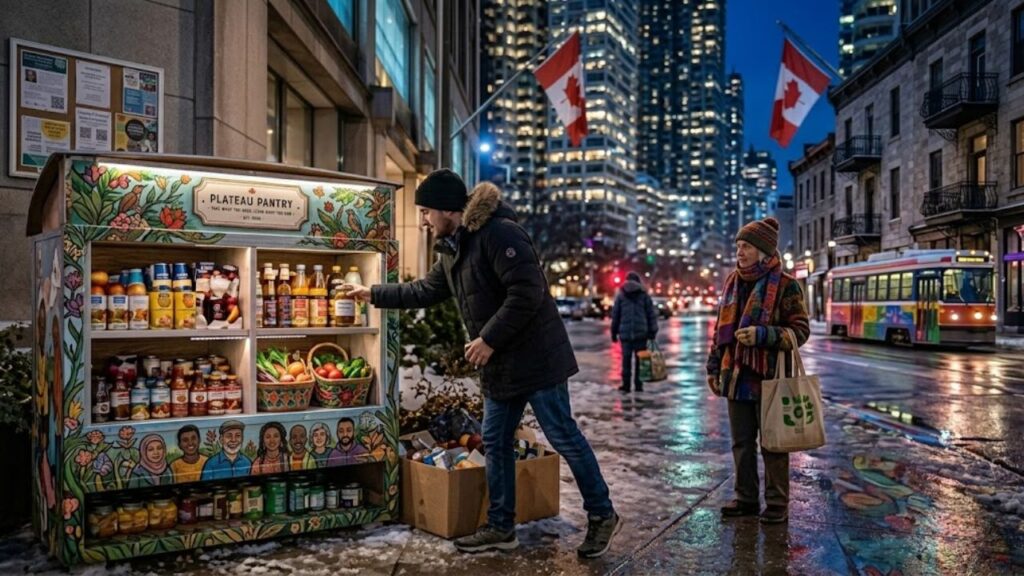
The report says that this is no longer just an economic issue. It’s turning into a political issue, with the wealthiest people having too much power over laws, taxes, and public priorities. Oxfam Canada says that in Canada, the richest billionaires now have wealth that is equal to the economic output of some countries. This is happening even though poverty has been rising since 2020.
 Goodbye to Multiple Job Tests: Simplified Service Canada Income Checks Launch 8 March 2026
This article explains what the report says, what it means for Canada in real life, and why the debate over wealth taxes, offshore tax havens, and political influence is likely to get even more heated in 2026.

The Global Picture: In 2025, billionaires’ wealth hit a new high.
According to Oxfam’s report, the richest people in the world will get even richer in 2025, and their numbers will also grow.
In just one year, wealth grew by trillions.
The report says that the wealth of billionaires around the world grew quickly in 2025, reaching a new record high with trillions of U.S. dollars. Oxfam says that this rise is not just impressive growth at the top, but also an extreme concentration of wealth that is changing economies and governments.
Oxfam thinks that this level of wealth accumulation is important because it happens at the same time as a lot of people around the world are having a hard time. The report says that the amount of money billionaires are making could pay for major efforts to reduce poverty many times over.
There are now more than 3,000 billionaires in the world.
The report also points out that the number of billionaires around the world has now gone over 3,000 for the first time. This is important because it shows that there is a structural change, not just a short-term spike.
Oxfam says that when billionaires have this much money and it is so common, it changes the way power works in society. Money doesn’t just buy nice things. It buys power, access, and the ability to change the rules.
More than half of the world’s people are in a small group.
One of the most shocking things the report says is that the wealth of the richest billionaires is now greater than the combined wealth of the world’s poorest half. That comparison is meant to show how unfair the distribution of wealth around the world has become.
The comparison helps explain why inequality has become a big political issue in many countries, including Canada, even if people don’t agree with how Oxfam framed it.
Oxfam’s Main Warning: Money Is Becoming Political Power
The report from Oxfam isn’t just a list of numbers. It warns about what can happen when too much wealth is concentrated in one place and starts to affect democracy.
Billionaires and Their Political Power
The report says that billionaires are much more likely than regular people to run for office and have an effect on political events. There are many ways that influence can show up, such as:
- Giving money to political campaigns
- Lobbying and pushing for policy
- Owning the media and shaping stories
- Giving money to research groups and think tanks
- Backing industry groups that want to pass laws
Oxfam says that these groups can change public policy so that it helps the very rich instead of the average person.
Why This Leads to a “Political Deficit”
The report says that rising inequality makes a dangerous feedback loop. As wealth becomes more concentrated, so does political power. That can make people less trusting of the government, which can lead to anger, division, and instability.
Oxfam says that people get angry quickly when they think they are falling behind financially and don’t have a real voice in politics. The report says that this is a big threat to social stability.
The Numbers Behind the Debate About Billionaire Wealth in Canada
The Canadian data in Oxfam Canada’s report makes the problem feel more local and real, even though global inequality is huge.
There are at least 89 billionaires in Canada.
Oxfam Canada says that Canada has at least 89 billionaires. The report talks about what that means for a country that values fairness, social mobility, and strong public institutions.
The number itself isn’t as important as what it stands for: a growing group of very rich people whose wealth has grown quickly in the last few years.
The Top 40 Wealthy People in Canada Now Have Almost C$550 Billion
Oxfam Canada’s report says that the 40 richest people in Canada got richer by more than 20% in 2025, bringing their total wealth to almost C$550 billion. It compares this to the GDP of a few countries, which suggests that a very small number of Canadians now have wealth that is equal to the economies of whole countries.
That comparison is meant to show how big something is. The gross domestic product (GDP) of a country is the value of all the goods and services it makes in a year. When personal wealth is close to that output, it means there is a lot of concentration.
The top 1% of people have almost as much money as the bottom 80%.
Another important point made in the report is that the richest one percent of Canadians now have almost as much money as the bottom 80 percent put together. This is a big deal because it means that the distribution of wealth isn’t just uneven; it’s heavily skewed toward a small group.
If this is true, it means that the people at the top are getting richer much faster than the rest of the population.
The Other Side of the Wealth Story: More People Are Poor and Hungry
Oxfam’s point is more emotionally powerful when it links the wealth of billionaires to the lives of regular Canadians.
Since 2020, poverty has been getting worse.
The report says that poverty in Canada has been going up steadily since 2020. This is important because it goes against the idea that economic growth makes life better for everyone.
In a country with strong institutions and social programs, rising poverty is a sign of deeper problems, like the rising cost of necessities, low wage growth, and housing that is too expensive.
More and more people are having trouble getting enough food.
According to Oxfam Canada, about 25% of Canadians now live in homes where they don’t have enough food and have to skip meals often. Food insecurity is now one of the most obvious signs of economic stress because it shows that you can’t afford to buy enough food.

Even if inflation slows down, the prices of food and housing can still be high enough to put pressure on families.
Why This Gap Seems Bigger Than a Normal “Wealth Divide”
Oxfam says that the situation is worse than a normal wealth gap. The report says that when wealth becomes very concentrated, it has effects on more than just the economy. It also has effects on society and politics.
This can happen in:
- Less faith in institutions
- Less faith in fairness and opportunity
- More tension between groups in society
- More and more pressure on public services
In short, the report says that inequality is changing the mood of the whole country.
In 2026, Oxfam Canada wants the government to do this:
The report doesn’t just talk about what’s wrong with the current situation. It also pushes for certain policy solutions that could become more important in Canadian politics.
A Wealth Tax for the Very Rich
Oxfam Canada’s main suggestion is a tax on the richest people in the country. The goal is to tax more than just annual income; it’s to tax extreme net worth.
People who support this say it could:
- Decrease the concentration of wealth
- More money for public services
- Make the tax system more fair
People who don’t like wealth taxes say they are hard to put into place, may cause capital flight, and can be hard to enforce. Still, the subject is likely to get bigger as inequality becomes harder to ignore.
Taking Action Against Offshore Tax Havens
Oxfam also wants stronger action against tax strategies that are based outside of the country. The claim is that complicated structures that move money out of reach of Canadian taxes are costing the country billions in potential tax revenue.
Oxfam says that if governments can get more money, Canada could pay for better programs in areas like healthcare, housing, and poverty reduction without making life harder for people who make an average amount of money.
Putting the system back in line with public priorities
Oxfam’s main message is that governments should put these things first:
- Access to healthcare that doesn’t cost too much
- Taking action on climate change and protecting the environment
- Fairness in taxes and enforcement
- Better protections for families and workers
Regardless of one’s agreement with the organization’s methodology, the political reality is that these themes are progressively influencing public discourse.
The “Trump Effect” and Why Oxfam Links It to Growth in Wealth
Oxfam says that the rise in billionaire wealth is linked to global political trends, such as U.S. policies that help high earners and businesses.
Billionaire wealth will grow faster after the end of 2024.
The report says that billionaire fortunes have grown faster since late 2024, and it links that trend to tax cuts and deregulation. Oxfam says that the effects have spread around the world, with double-digit increases in billionaire wealth in many places, even though the biggest gains may have been in the United States.
How U.S. Policy Can Also Affect Canada
Trade, investment flows, and financial markets all link Canada’s economy to the U.S. in a big way. When U.S. policies raise returns on capital and corporate wealth, they can have effects on global markets that are also good for wealthy Canadians.
This doesn’t mean that U.S. policy is the only thing that matters, but it can help global wealth concentration.
Why This Report Is Important for Canada’s Future
You don’t have to follow billionaire rankings to see the effects of inequality in everyday life.
Housing, health care, and social stability
When wealth is concentrated at the top, it puts pressure on things like:
- How affordable housing is
- Getting good health care
- Chance and education
- Funding for public infrastructure
- Have faith in the government
Oxfam’s main point is that inequality is not only unfair, but it also makes things less stable.
The Danger of Anger and Division
One of the report’s most important warnings is that being poor makes people hungry, but being left out of politics makes people angry. That anger can lead to political instability, social division, and a growing lack of trust in democratic institutions.
Canada has historically avoided the extremes seen elsewhere, but rising costs and growing inequality are testing that stability.
In 2026, the debate over inequality in Canada will get louder as billionaires’ wealth grows.
Oxfam’s new report says that billionaires’ wealth in Canada is getting to levels that are hard to explain in a country where many families are having trouble affording food and other basic needs.
The main point of the report is that extreme wealth is no longer just a money problem. It is turning into a political issue that can change laws, priorities, and public outcomes. In 2026, the push for changes like wealth taxes and stricter enforcement against offshore tax havens will probably get stronger. This is especially true as Canadians call for solutions that make life more affordable and restore faith in fairness.
No matter how quickly policymakers act, one thing is clear: the conversation about wealth concentration in Canada is no longer on the sidelines. It is becoming a major topic of discussion in the country.